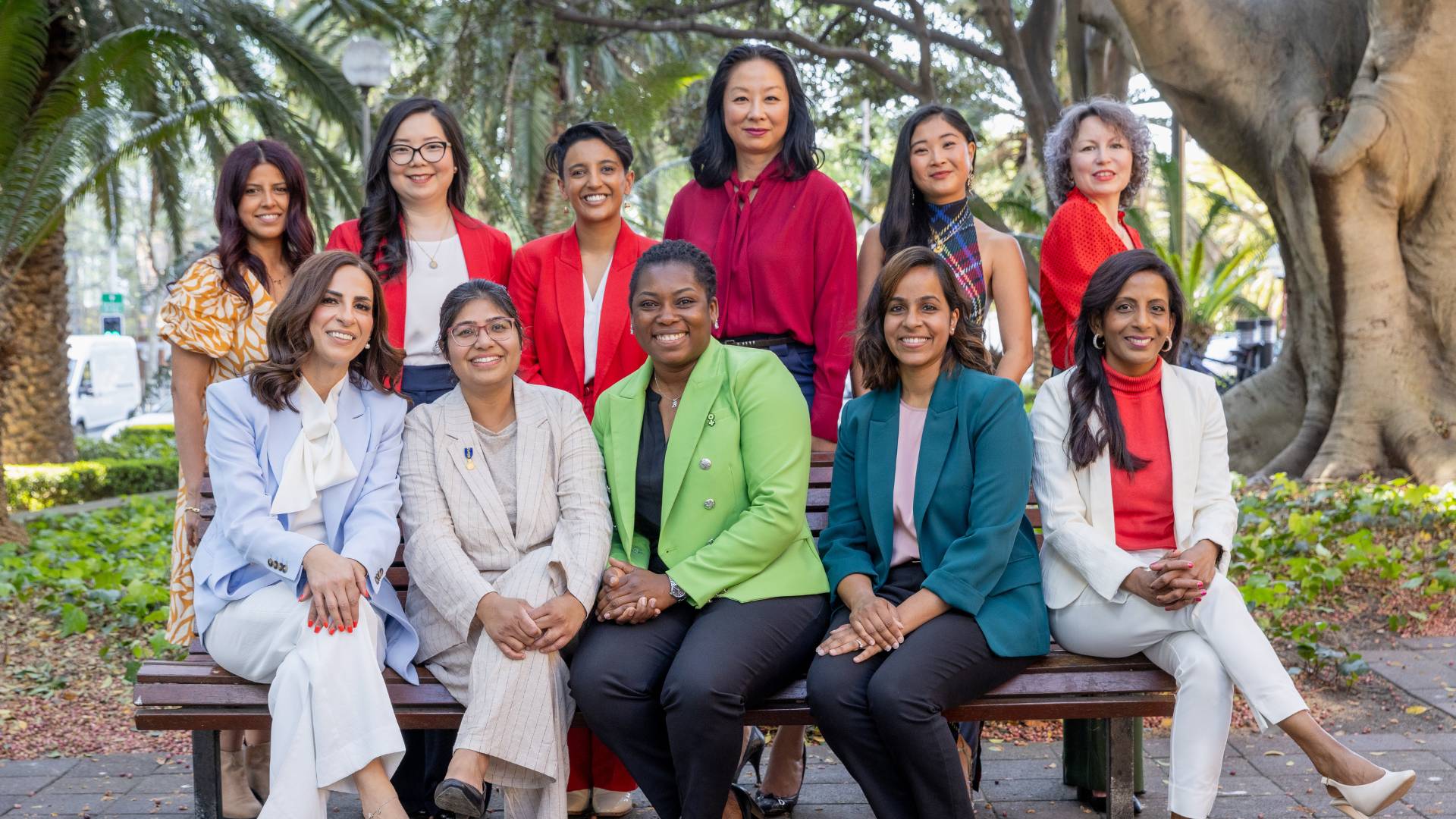
Photo: Members of the 2024 NSW cohort
Understanding the barriers to representation – and building pathways that lead to lasting change
November 2025
Australia now has the most culturally diverse federal parliament in its history – an important step towards true representation of our communities.
Yet the unfortunate reality is that culturally and linguistically diverse (CALD) women continue to face systemic barriers as they work to make their voices heard in politics. In 2024, we set out to understand their journeys more deeply, engaging Stacey Ong (a Women’s Leadership Institute Australia Fellow and Founder of One Red Step) to research the role of race, culture and intersectionality in shaping women’s pathways into politics.
Stacey spoke with Pathways to Politics Directors and alums from our longest-standing programs in NSW, Queensland and Victoria, with the aim to understand the barriers and enablers for CALD women at each stage of their political journey, and to identify practical ways we can support them.
From the beginning, Pathways to Politics has been intentional about inclusivity. We’ve partnered with Politics in Colour, run targeted outreach, profiled the experiences of CALD alums and worked to create culturally safe learning environments. These efforts are paying off: our cohorts consistently include more CALD women than population averages, and participation continues to grow.
But our research still shows that CALD alums are three times less likely to seek preselection and ten times less likely to win preselection at State and Territory level. The barriers lie in access: entrenched networks, gatekeeping preselection and cultures that question rather than welcome difference. Alums describe racism, limited networks, financial strain, concerns about cultural safety, self-doubt and the pressure of being seen only as “the CALD candidate.”
Once on the ballot, success rates are strong – especially in local government. Those who have succeeded point to mentorship, peer support, community encouragement and self-belief.
Pathways to Politics will keep doing all that we can: growing partnerships, strengthening networks, building peer support, and embedding explicit recognition of racism alongside practical strategies to address it.
Lasting change requires that this commitment is matched across all of our political institutions. When this happens, Australia’s most culturally diverse parliament will no longer be seen as an exception, but as the beginning of a new norm.
“This well-thought-out program is pivotal in driving change and elevating the presence of women in Australian politics. As a migrant woman actively engaged in politics, I am particularly delighted to witness the program’s accessibility to women from diverse backgrounds, including those with culturally diverse and migrant experiences.
– Seema Abdullah, former Mayor, Greater Shepparton City Council
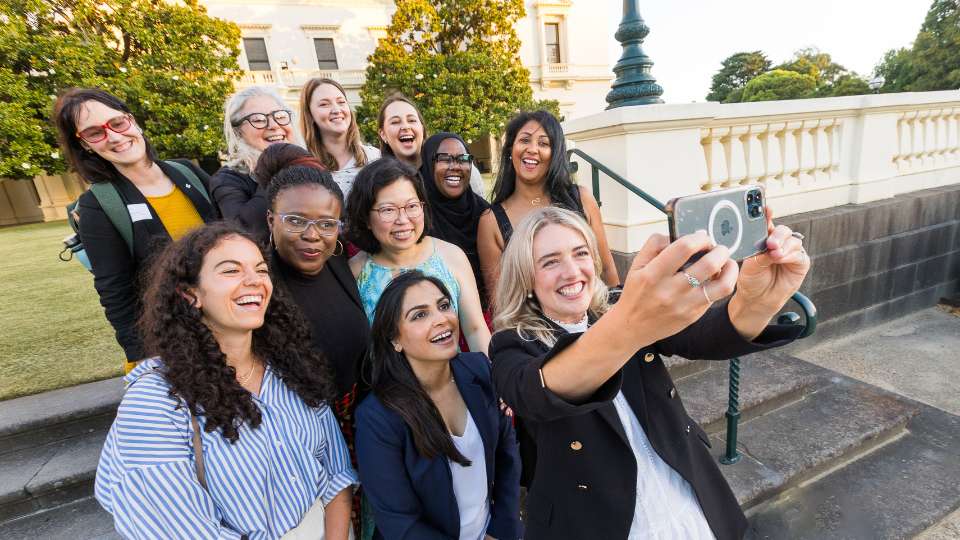
Leading by example
To highlight just a few of our many inspiring Culturally and Linguistically diverse alums…
- Sally Sitou MP – bringing fresh perspective to the federal parliament
- Anasina Gray-Barberio MP – the first Pasifika woman elected to the Victorian Parliament
- Cr Yolanda Kanyai (City of Palmerston), Cr Samantha Choudhury (City of Stonnington), Cr Li Zhang (City of Glen Eira), Cr Elisha Lee (City of Monash) – breaking new ground in local government
- Dr Wesa Chau and Michelle Lim – nationally recognised advocates amplifying diverse voices
- Abiola Akinbiyi – Victorian Honour Roll inductee and the first African woman in 50 years to Chair the Ethnic Communities Council of Victoria
 Read
Article
Read
Article 
 Read
Report
Read
Report 
 Listen to
Audio
Listen to
Audio