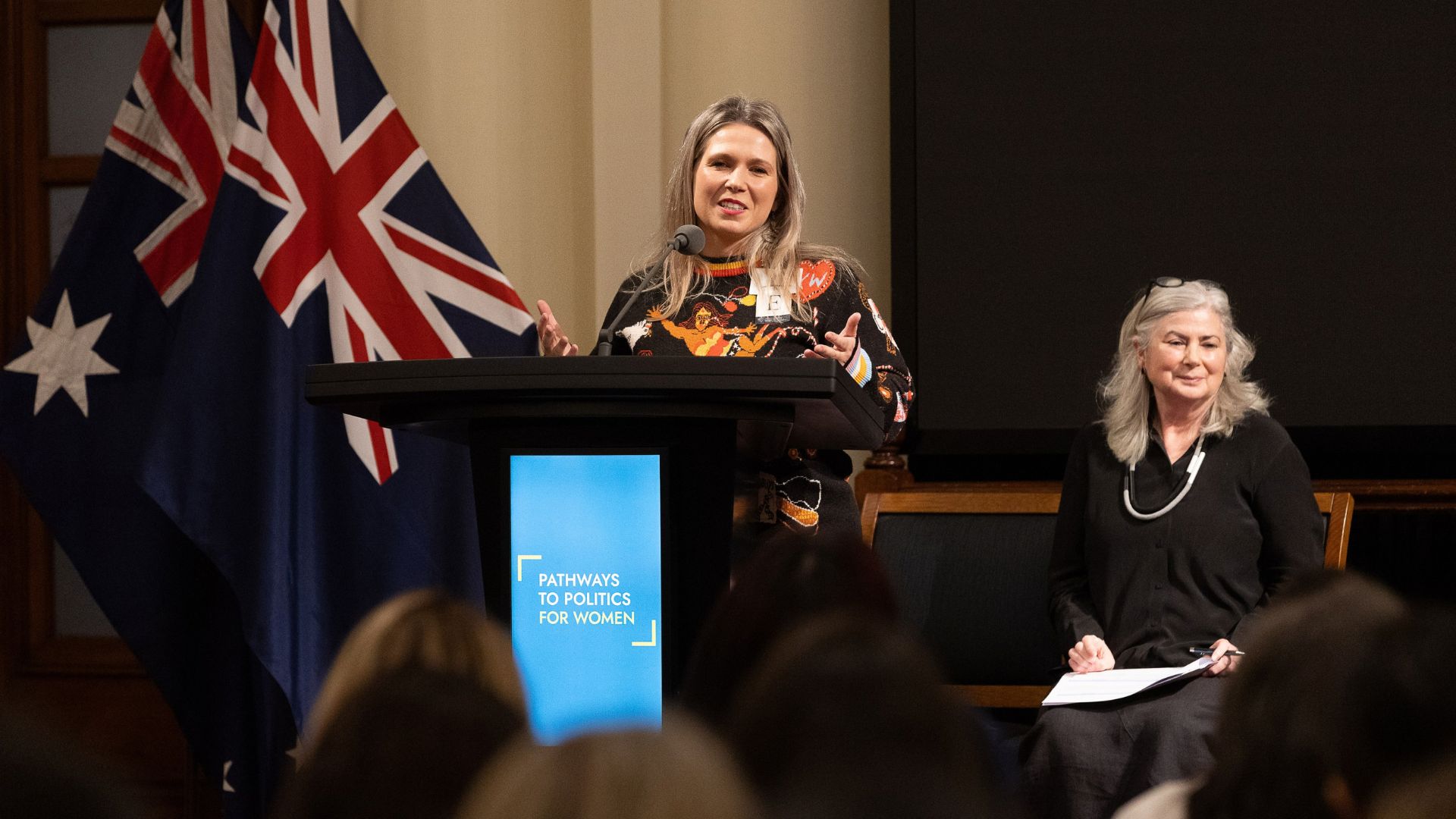
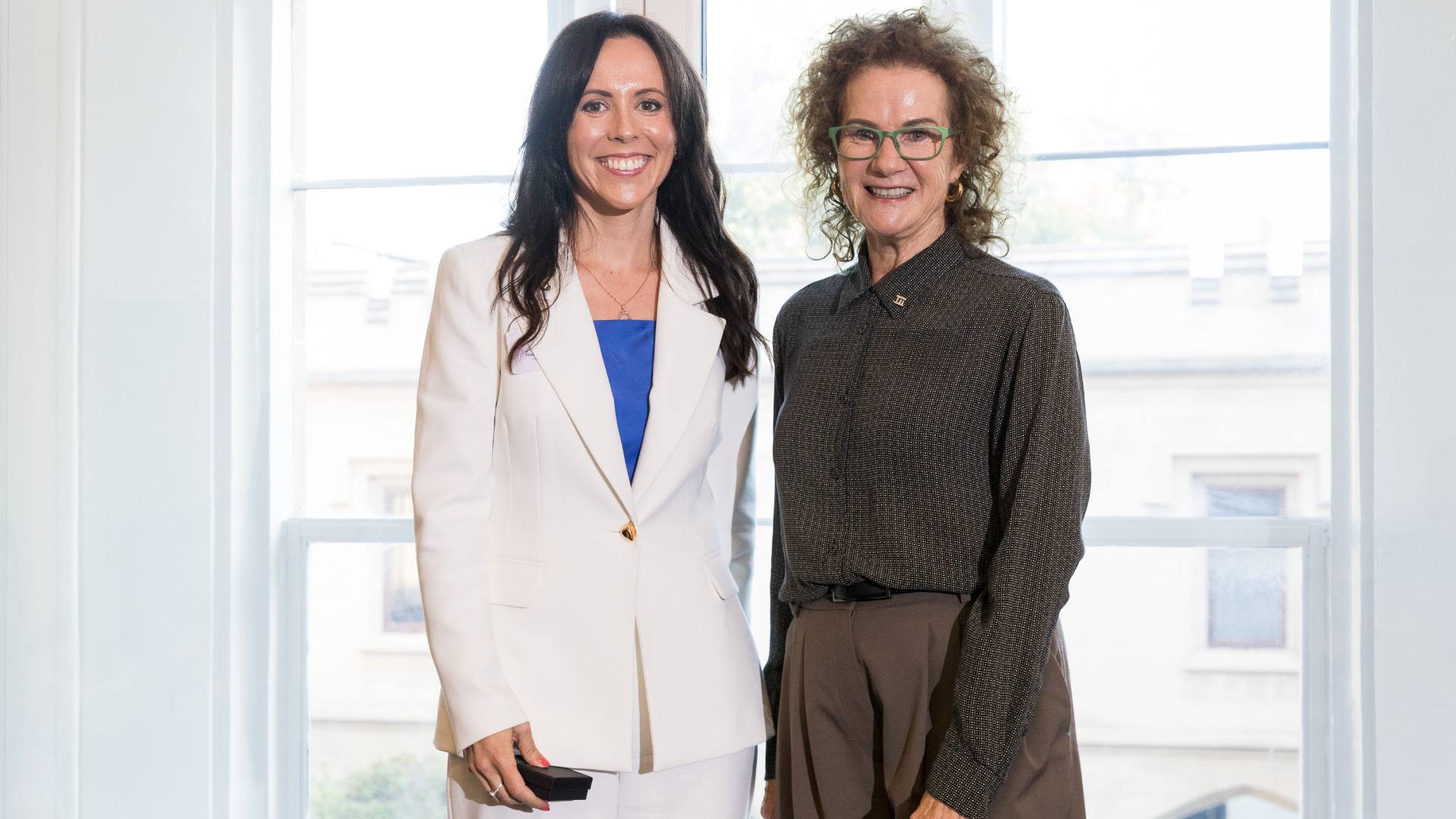
Lead photo: Pathways to politics alum Hayley van Loon with Program Founder Carol Schwartz AO
Hayley van Loon, speech to the 2025 graduating cohort, Victoria
I want to start with why I’m here. Not here tonight, but here at all. My dad was a builder who grew up in housing commission. My mum was a hairdresser who grew up in the family fish and chip shop in Williamstown. My mum had one dream for her daughters: that we would be educated, and that we could support ourselves. Because she had found herself, like so many women in this country, reliant on a partner who wasn’t always kind. And she was determined that wouldn’t be our story.
So mum sent me to MLC. She paid for it by ironing the clothes of families in Kew, Toorak, and Balwyn. Collecting cash in a Quality Street tin hidden above the fridge. And she stayed on a payment plan with MLC for years after I graduated. Because it mattered that much.
That’s why I’m here — because of a woman with an iron and a tin who decided her daughters would have choices she didn’t. And every woman in this cohort has a version of that story. We are all standing on someone else’s effort tonight. And I think that’s worth saying out loud.
“This program…put us in a room with women from different parties, philosophies and life experiences — and asked us to do something radical: disagree well.“
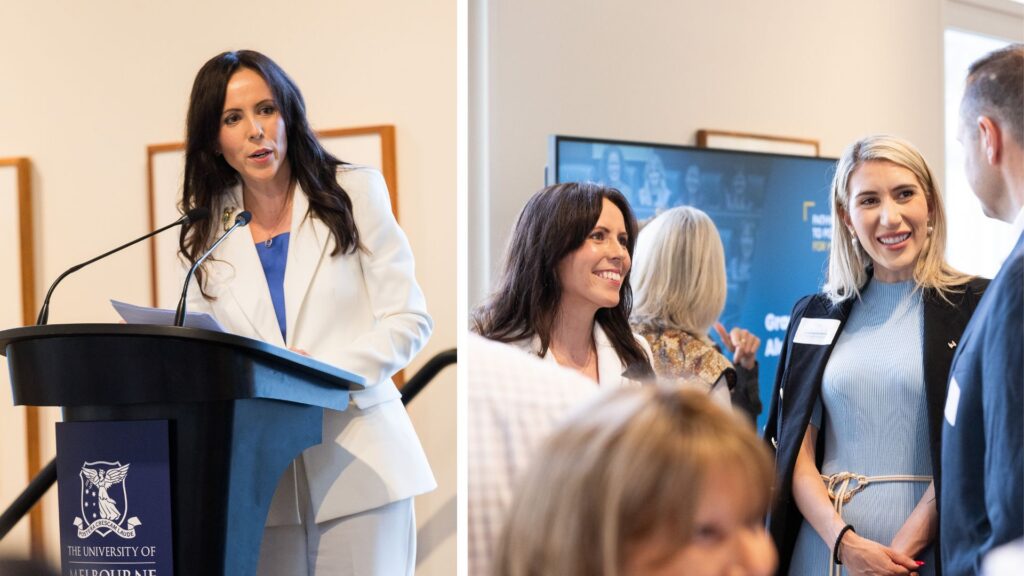
I went on to work in national security. And I can tell you, there is one principle from that world that explains everything this program gave us: if you only surround yourself with people who think like you, you will never see what’s coming.
At university I studied political science and history. My boyfriend at the time, now my husband, was a young Army officer. So naturally, I became very interested in every possible alternative to sending him somewhere dangerous. I studied non-violent intervention, Gandhian ethics, anything that offered another path.
It didn’t work. He deployed. But what stayed with me was the instinct: seek out difference. Understand the full picture before you’re forced to act on half of one.
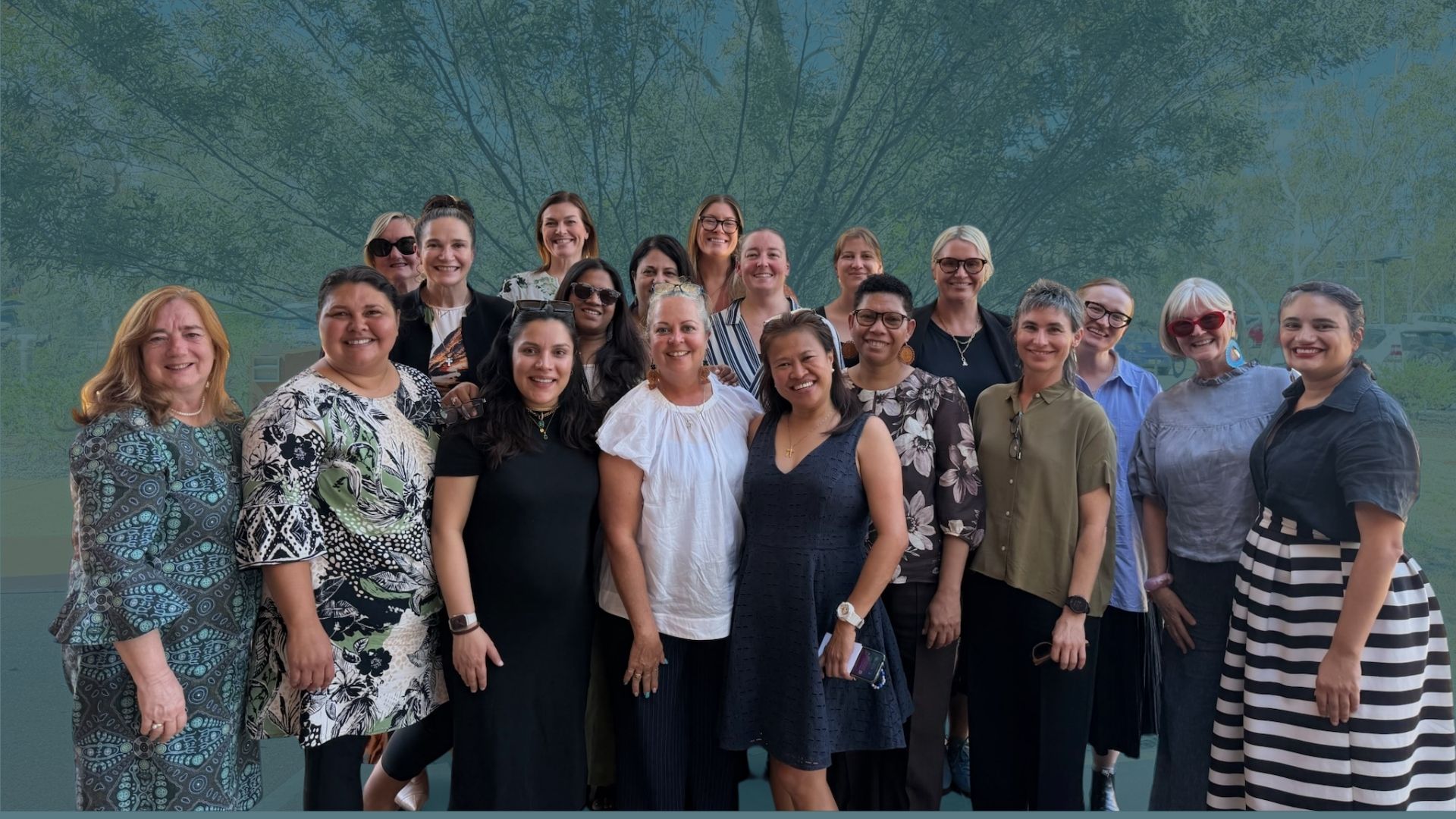
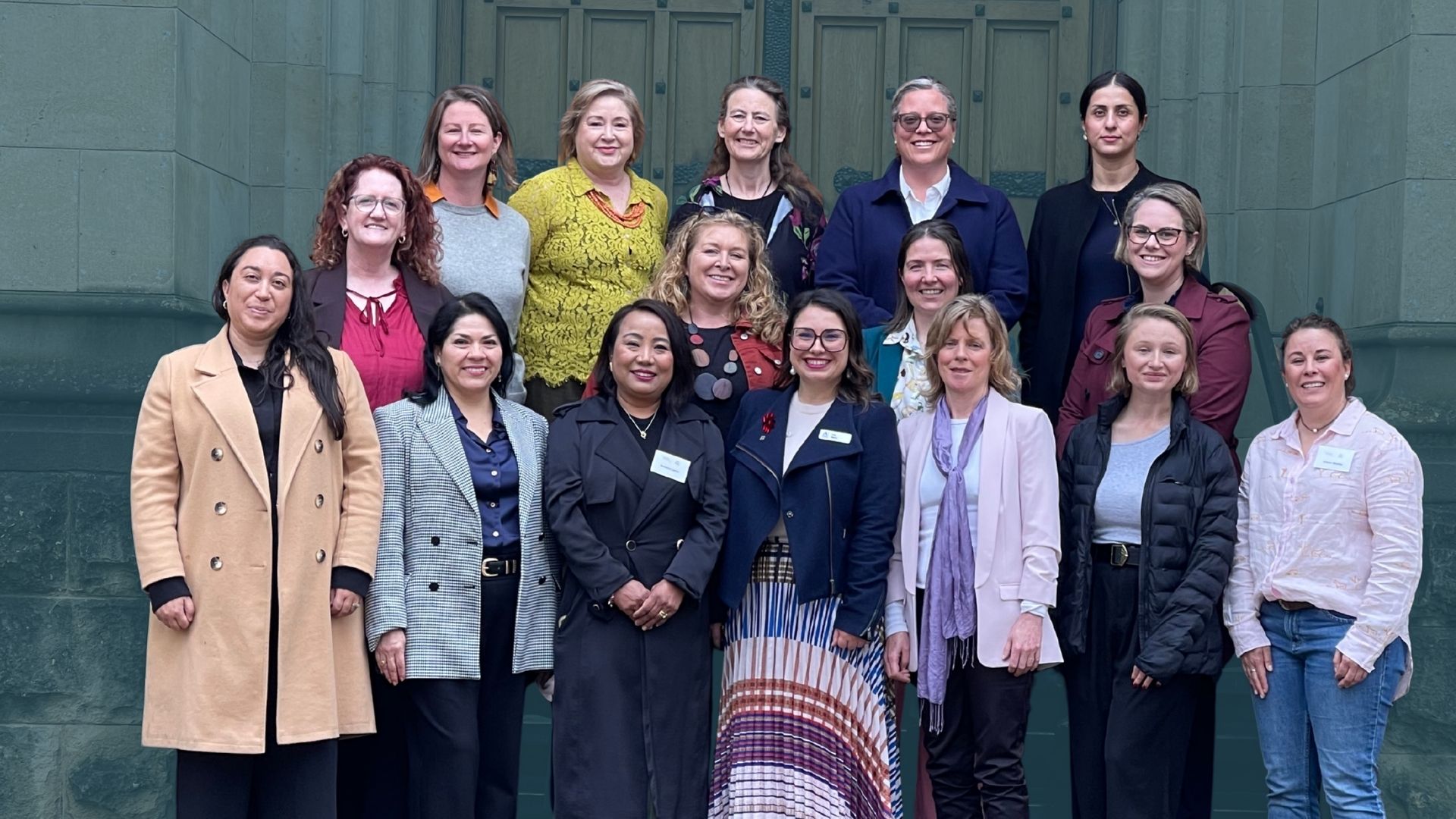
That’s exactly what this program did. It put us in a room with women from different parties, philosophies and life experiences — and asked us to do something radical: disagree well.
There’s a saying in the intelligence world: if everyone in the room agrees, someone isn’t thinking. This cohort never had that problem.
Now, for the guests here tonight, I need to tell you about a door. There was a sliding door in our session room that opened by itself. Repeatedly. Mid-conversation. With dramatic timing and absolutely no explanation. Eventually we just accepted that the room was haunted, probably by a former politician who couldn’t quite believe what was happening inside.
And for a program about women in politics, we couldn’t have asked for a better metaphor. We’ve all had our sliding door moments. The difference is, this program taught us how to walk through them.
But what I’ll carry longest from this program is what happened when one of us was under pressure. During media training, when the questioning intensified, even in a simulation, every one of us felt it. Not because it was unfair. It was excellent preparation. But because someone was coming after one of ours. And something protective kicked in. That’s what this program gave us. Being part of this community means we don’t fight that alone. We are each other’s early warning systems. Not the enemy you disagree with, but the opponent who still recognises your humanity.
Some of us will contest the same seats. Some will sit on opposite sides of the chamber. We will argue. We will vote differently. That’s politics. But there is a difference between opposition and destruction. We contest ideas, we do not tear each other down. And when the line between scrutiny and cruelty is crossed — we stand up for each other. That’s not optional. It’s the standard. We can disagree…fiercely. But we do not abandon each other.
Politics in Australia is not kind to women. And in a country where too many women still face violence, still face coercion, still face barriers to independence, decisions about women’s lives cannot keep being made without women in the room. So, on the days when the scrutiny is louder than the progress, when the cost feels higher than the reward, remember that the hard days are just the stories you haven’t told yet. And trust me, you’ll dine out on them.
On the days you feel like you’ve got this — we’ll be cheering. And on the days you feel like you don’t — we’ve got you.
I’ll leave you with this. When Theresa May resigned as Prime Minister, she wished her successor well — a man with a very different vision for the country. She said: “[t]heir successes will be our country’s successes, and I hope that they will be many.”
That’s the spirit I want us to carry.
We will disagree. But we should always — always — be pulling for each other’s success. Because when women succeed in public life, Australia succeeds.
Some people are never going to clap for you. Win anyway. Because the work matters. Because Australia matters. Because the next woman watching… the one who’s wondering right now whether she’s allowed to want this… she matters most of all.
And for our daughters… so that they never need a Quality Street tin above the fridge just to have a chance. Tonight is a beginning. And I think Australian politics is better for it.
Hayley van Loon is CEO of Crime Stoppers International, working with partners around the world to strengthen public trust, improve reporting pathways and support safer communities. She also runs Magnolia Intelligence, her own independent intelligence and security consultancy. She is an alum of the 2025 Victorian program.