In this blog series, members of our national Pathways to Politics community share practical insights into how they’re using AI in real-world political contexts, tips on where AI can be useful, lessons they’ve learned along the way, and areas where they believe caution is needed.
Susanne Newton
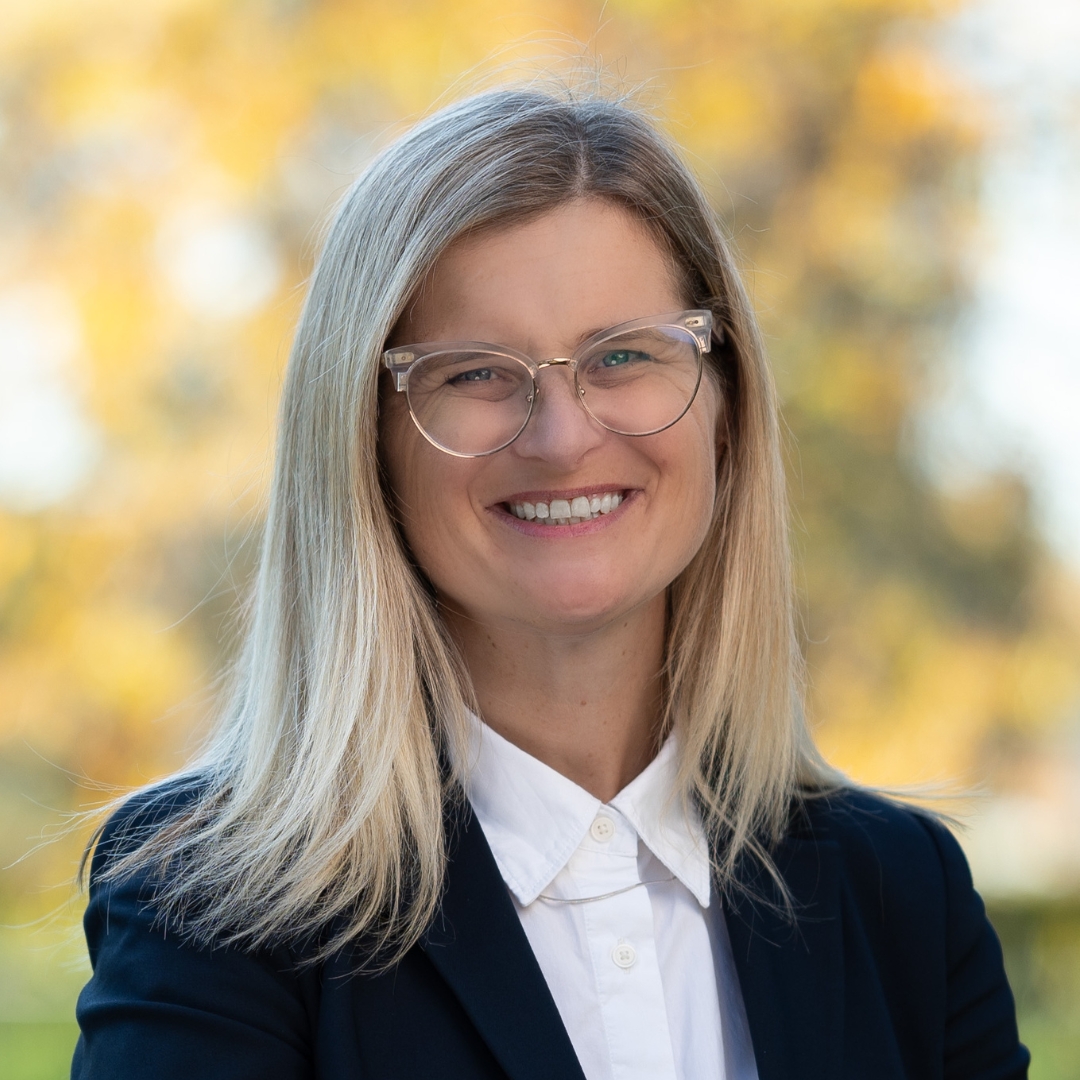
Susanne Newton is the former Mayor of Darebin City Council (2023-2024) and served eight years as a Councillor. She is an alum of the inaugural 2016 Victorian Pathways to Politics program and currently serves on the program’s Advisory Committee.
Women in politics need to understand AI and I would encourage everyone to stay up-to-date with AI developments, which are rapid.
My view is that AI has the possibility to fundamentally disrupt and change society as a whole by collapsing or replacing what have been traditionally ‘human’ endeavours and dismantle social fabric as we know it. It’s already happening. Where this could affect women in politics includes:
Authenticity
Trust in politicians is already low and as more content becomes AI generated, bad faith competitors and actors will use it to exploit how candidates and politicians are perceived, particularly women. ‘Cutting through’ could be harder than ever and women in politics need to understand the tools and, if they choose, use them ethically and well.
That said, women in politics are also very well placed to demonstrate authenticity and humanity and raise environmental consciousness about the devastating impacts of data centres and the human cost of mass job losses.
The candidates and politicians who are able to respond and act through a human, people and planet-centred lens could do very well if they find a way to cut through the noise.
Consider: how you can demonstrate your authenticity and realness to your community and elevate your voice and platform despite the AI noise? How can you use the tools for good?
Political solutions to a radically different workforce and economy
AI has the potential to lead to mass job losses. The single most important part of government revenue in Australia is individuals’ income tax.
Consider: how can government fund itself and support people to live well if the workforce changes significantly? On the more optimistic side, what opportunities are there for people to flourish, be creative and connect with each other if time and space is freed up from traditional forms of work? How can you as a candidate or politician support, fund and advocate for creative expression of our collective humanity such as art, music, poetry and theatre?
AI as a tool for good
Humans created AI. It doesn’t control us, and it doesn’t have to. As fellow Pathways to Politics alum Dr Josephine Okurame has demonstrated, there are some incredible ways that AI tools can assist us in campaigning, policy development, structuring how we do politics, and when used well it can provide us access to far more information and insight than we have at hand quickly and effectively.
When I first ran and got elected to Darebin council in 2016 I was up against candidates from bigger parties with far more resources than I had. To be in a position to win, I had to make myself and my campaign look ‘bigger’ than it really was. A tip from a seasoned councillor, for example, when doorknocking, was to speak to one or two people on a street then leave a ‘sorry I missed you’ note to everyone else, to give the appearance you’d knocked every door.
I see great potential for independents and smaller or emerging party candidates to even the playing field by using AI tools well to draw from a pool of knowledge that is far greater than their own. The big challenge of course, is that this existing knowledge is currently being mined by AI companies without knowledge, consent or payment from the humans whose knowledge created what AI spits out.
Pushing back against corporations
The future is in our hands, and as voters, candidates and politicians we need to be wary of the huge corporations that have the potential to destroy economies and the social fabric of our societies. Governments need far stronger regulation and to push back much harder against the data centres that are diminishing our precious water supplies and the corporations that are mining human knowledge without consent or payment that at worst will destroy whole industries.
Women in politics need to be thinking now about solutions to this existential crisis. Human solutions are needed, and women are well placed to find them.
Full contributions
- Dr Josephine Okurame, AI educator and researcher
- Cr Elisha Lee, Deputy Mayor City of Monash
- Susanne Newton, former Mayor City of Darebin
- Ruth McGowan, former Mayor of Baw Baw Shire Council and author of Get Elected
- Cr Leanne Patrick, Gladstone Regional Council
- Elisa Choy, founder of Australia’s first AI-powered strategic market research company
Contributors to this series:
- Dr Josephine Okurame, AI educator and researcher:
AI as a thinking partner, tips for policy translation, interview preparation, pressure-testing ideas and fact-checking.
- Cr Elisha Lee, Deputy Mayor City of Monash:
Tips for saving time, campaign branding, good prompts, choosing the right AI tools, accuracy and accountability.
- Susanne Newton, former Mayor City of Darebin:
AI as a tool for good, importace of authenticity, insights on the impact on jobs, democracy and the environment.
- Ruth McGowan, former Mayor of Baw Baw Shire Council and author of Get Elected:
A template for AI campaign disclosure, insights on transparence and authenticity.
- Cr Leanne Patrick, Gladstone Regional Council:
Tips for improved administration, speeches and communications, meeting preparation and audience testing.
- Elisa Choy, founder of Australia’s first AI-powered strategic market research company:
Insights on the importance of human connection and using AI sparingly.
Inclusive AI Pledge
Our Founding Partner, Women’s Leadership Institute Australia (WLIA), has partnered with Champions of Change Coalition to launch the Inclusive AI Pledge, a practical initiative supporting more inclusive and equitable use of AI.
At the heart of the Pledge is the Inclusive AI Prompt, a simple, repeatable tool that helps people embed gender equality and inclusion when using tools like ChatGPT and Copilot in everyday work, from communications and policy to procurement and design.

 Read
Article
Read
Article